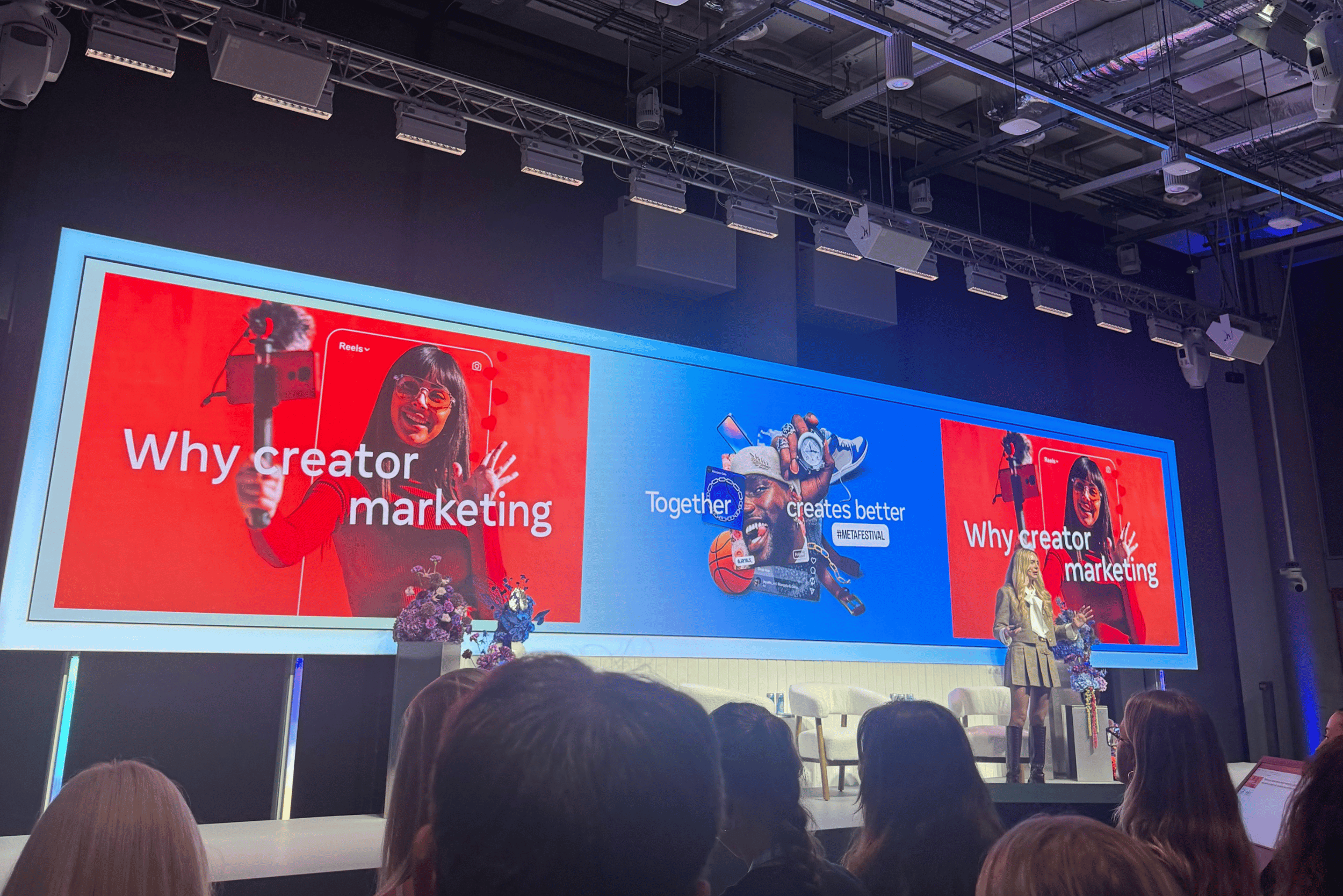



Visibility stopped living on websites a long time ago. People find answers wherever they happen to be looking: in Google, inside AI assistants like ChatGPT and Perplexity, on TikTok and YouTube, across marketplaces, in Reddit threads, in a friend’s Instagram Reel. The homepage is no longer the whole story. It’s one surface among many.
We’ve been building around that reality for years. This week, Google made a big piece of it measurable.
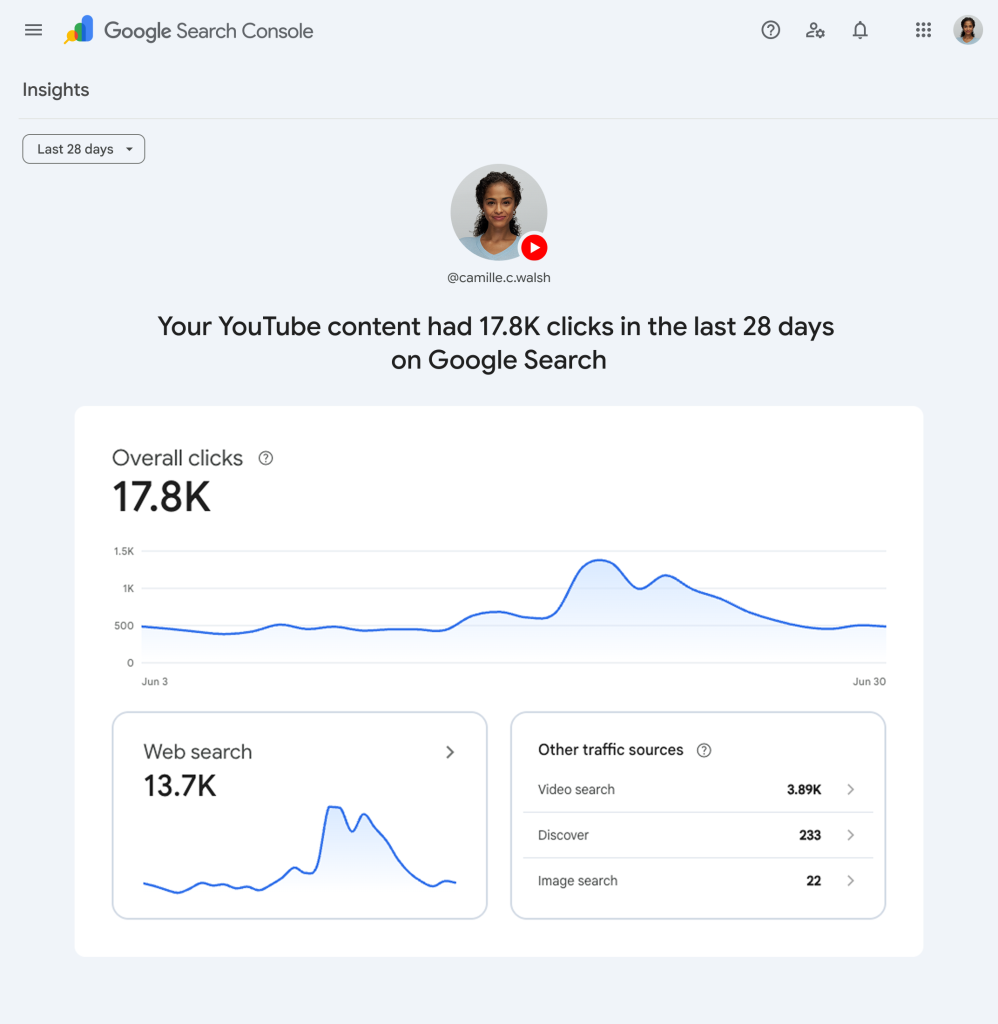
On the 7th of July 2026, Google announced platform properties, a new Search Console property type that lets creators and publishers see how their Instagram, TikTok, X and YouTube content performs on Google Search and Discover: clicks, impressions, top-performing posts, and the queries sending people there. The feature was announced on the Google Search Central blog and documented in the Search Console help centre, with a gradual rollout reaching accounts over the coming weeks.
What’s new here isn’t that social content shows up in Google. It has done for years. What’s new is that Google is expanding Search Console’s definition of a searchable asset, bringing social and video content into the same measurement conversation as websites. For the first time, a creator with no website at all can verify a platform and see the query data behind it.
Why this matters now
Search journeys are changing shape. 47% of Google searches now trigger AI Overviews, with only around 1% resulting in a click. Attention is spreading across AI answers, social, video and classic results all at once, and a brand that measures only its own website is measuring a shrinking slice of where it’s actually being found. That’s exactly why visibility has to be measured across every surface, social included.
Platform properties are Google acknowledging what marketers have been watching for a while. Discovery is distributed. Now there’s a number attached to part of it.
What platform properties actually do (and don’t)
It’s worth being exact here, because the detail changes how you use it.
Platform properties are organic Search Console reporting. Think of it as creators and publishers finally seeing how their own posts land in Google, rather than for advertisers chasing brand metrics.
It reports on the property owner’s data, not the brand’s: whoever verifies the property owns the numbers. It measures how it performs in search, so it won’t show your TikTok in-app views, only how Google sent people to that content. And it is not the same as Search profiles, the public creator pages Google launched in June 2026. One exposes content; the other measures it. Platform properties are the mature version of a December 2025 experiment that first pulled social-channel data into Search Console Insights.
One more piece of honesty: this closes a measurement gap, it doesn’t solve attribution. It shows people found your content in search. It doesn’t show whether they bought anything. If someone sells a Search Console update as social ROI measurement, they’re overselling it.
Where Everysearch™ comes in
Here’s the shift underneath the feature. Social content now has a measurable search afterlife. A post no longer has to be a moment that disappears once the feed moves on. It can be a discoverable asset that keeps earning visibility for months, surfacing for real queries with real intent.
That’s the ground Everysearch™ is built on: capturing a brand’s visibility across every searchable platform holistically. Google’s tool is a single window (one property, one platform, one set of numbers). Everysearch™ is the whole view, joining Google, AI answers, social, video and marketplaces into one picture and connecting it to a growth strategy. Underneath that sit the capabilities that make it work: Generative Engine Optimisation (getting brands cited inside AI answers), Answer Engine Optimisation (owning the response, not just the ranking), SEO, Content, Digital PR and Paid Media, working together rather than in silos. Luminr, our AI-powered lens on the searchable web, is what lets us see it all at once.
So use the dashboard. It’s genuinely useful. Then let the full picture become a plan. That’s the difference between a free single-surface tool and Brand Optimisation: how a brand shows up when the click is disappearing and the answer is everything.
This changes how creator partnerships should be planned
The most interesting consequence isn’t the reporting. It’s the ownership.
Because the data sits with whoever verifies the property, the question of who owns what stops being an afterthought and becomes a decision to make before a campaign runs. If a creator owns the property, the creator owns the search data. If the brand does, the brand does. That single nuance reshapes how creator campaigns should be structured, measured and contracted, and it’s a conversation the creative team and the search team ought to be having together, early.
It’s also where working with our sister agency Disrupt, the influencer and creator specialists, comes into its own. Disrupt builds the creator content; Found makes it findable. Disrupt runs the creator-first, culturally relevant campaigns that land for the likes of Wizz Air, Vinted and The FA, owning the creative instinct and the creator relationships. Found ensures that content earns durable search visibility and is measured across every surface, owning the search and measurement layer. One side makes people care. The other makes sure the content they care about can be found, ranks, and keeps performing.
Get the two working together from day one and the model becomes clear: creator campaigns designed for search from the start. Disrupt briefs the creative for cultural pull and platform nativeness. Found builds in the search intent, the AEO, GEO and entity signals so it ranks and gets measured, and advises on property ownership before anyone hits publish. Two opportunities from one investment. The Disrupt companion to this piece picks up the creative side of the same story.
The bigger picture
Platform properties are one dashboard. The change they point to is much larger: visibility no longer belongs to the websites a brand owns. It happens wherever people go looking for answers, and it can now be measured further across that map than ever before.
That’s the whole point of Everysearch™. Search isn’t a channel to be managed anymore. It’s the entire surface a brand competes on, and the brands that treat every platform as a searchable, measurable, optimisable asset are the ones who’ll win the visibility that actually converts. Built with data, AI and great humans.
Make every search count. Get Found.
Want to see your visibility across every searchable platform? Get in touch.